Demonstration Site
The demonstration of the Surface Onboard Traffic Alerting System is not bound to any specific site. Its objective is to collect and analyze data in real environment during aircraft taxi operations on various airports. The diversity of the recorded data is beneficial and intended. So the airports, airspace and traffic for the data collection are not particularly specified with the exception that operations on large busy airports are preferred.

Partners Involved
Honeywell provides expertise and specific experience for the development of logging equipment, consequent analysis and evaluation of collected surface data. Airbus Operations will participate in the data collection with help of airspace users. DLR (AT-One) will follow the demonstration activities, provide expertise in the preparation of the demonstration and support the dissemination activities.
Content of the Demo
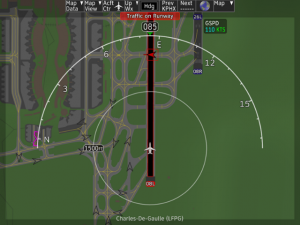
The aim of the Onboard Traffic Alerts demonstration work package is to provide evidence, that the performance of real ADS-B data is sufficient to support the function of onboard alerting technology. These use ADS-B technology to get information about surrounding traffic so the ADS-B data performance is a key enabler for its proper functions.
The Onboard Traffic Alerts demonstration will contribute to the following SESAR project:
- On-board Traffic Alerts (SESAR project PJ03b-05).
Demonstration Setup
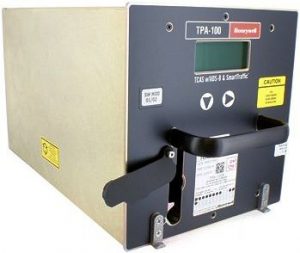
This exercise covers data logging of the ownship position and surrounding traffic via ADS-B as well as the subsequent data analysis. As platform for collecting the data on board of the aircraft Honeywell’s TCAS (Traffic Alert and Collision Avoidance System) is used, which provides extensive logging capability. No aircraft modification is required to enable the ADS-B recording capability. The logging capability will be secured by Honeywell’s MonTPA logging tool developed to log all Traffic Computer parameters. Several airlines agreed to participate in the campaign and nine Airbus A320 or A330 aircraft are currently confirmed to contribute. The airlines will be provided with data logging hardware and procedures needed for data collection. The airline’s engineers will regularly upload the data collected on the aircraft to Honeywell’s servers. The expected duration for the data collection is 40 weeks, all planned for 2018. Honeywell will continuously analyze the data using existing or newly developed tools. The aim is to provide evidence that the performance of ADS-B technology is eligible to support the proper function of onboard traffic alerting Technology.